
Beyond the Marina: The UAE’s Marine Industry Runs on Yards, Ports and Specialist Suppliers
New ship-repair capacity in Abu Dhabi, rising dry-berth activity in Dubai and established yacht manufacturing in the northern emirates reveal a marine economy far broader than the charter waterfront.
4 Nov 2026
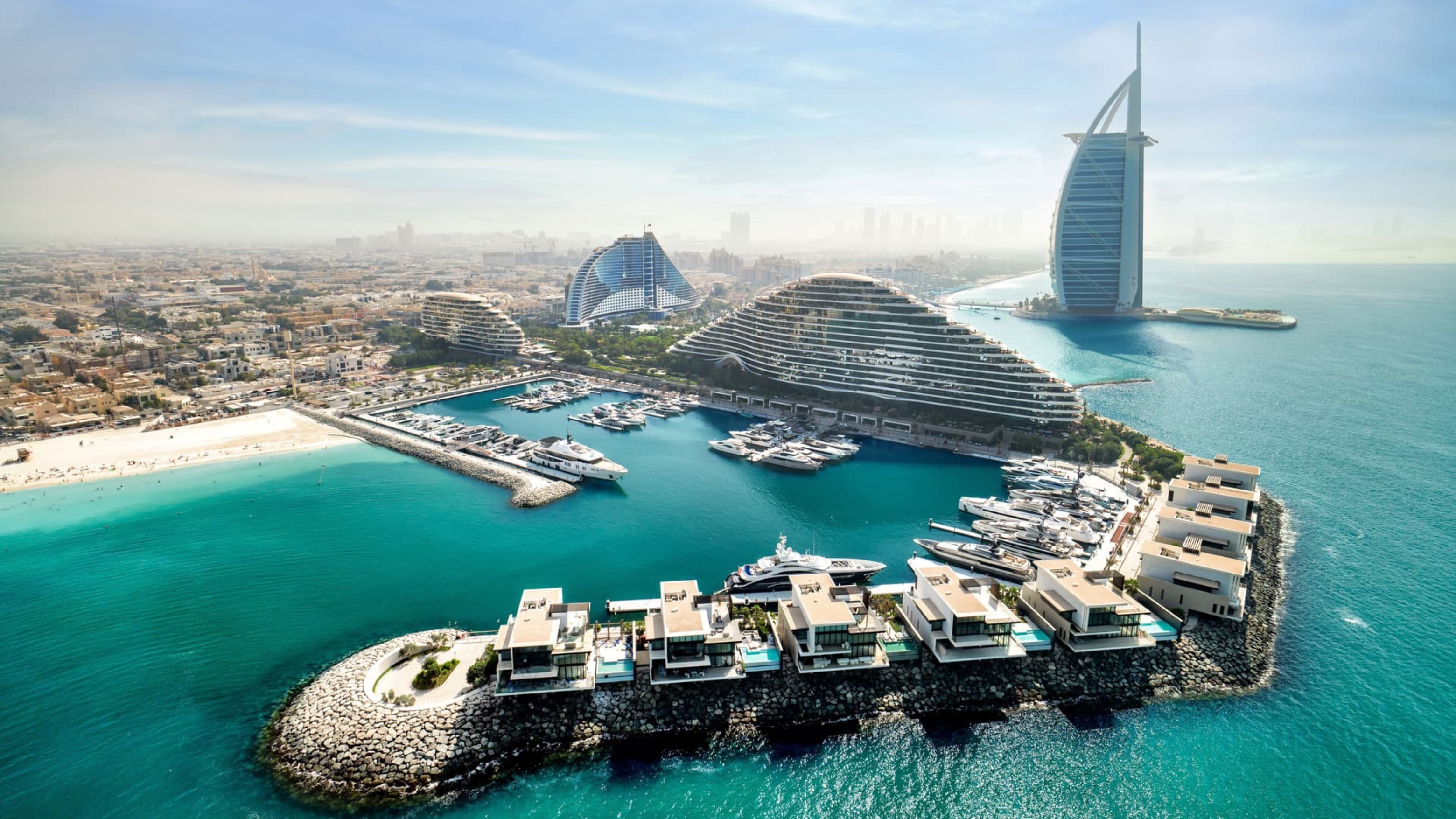
On 28 July 2026, Dubai Maritime City recorded 52 vessels in its dry berths on a single day. DP World, the cluster’s operator, said it was the facility’s highest daily total. The record exposed a less visible side of the UAE’s marine economy: vessels lifted clear of the water for inspection, engineering, repair and refit.
That work supports leisure craft, but it also serves offshore vessels, working boats and commercial fleets. The distinction matters. The businesses behind a private yacht do not operate in a self-contained tourism economy. They draw on workshops, technicians, equipment suppliers, shipyards, ports, surveyors and specialist services spread across several emirates. Some workshops serve both leisure and commercial vessels, although a contractor’s experience, equipment and approvals for one market do not establish its suitability for the other.
That supporting network does not stop at an emirate boundary. Dubai combines a prominent charter and marina market with ship-repair infrastructure. Abu Dhabi has a substantial commercial maritime and engineering base. Ajman and Umm Al Quwain are significant locations for yacht building and refit, while Sharjah, Ras Al Khaimah and Fujairah support different combinations of port services, fabrication, shipping and marine supply. It is more useful to examine those capabilities than to assume that one city contains the entire industry.
Dubai: leisure visibility backed by industrial capacity
Dubai Marina and Dubai Harbour are the most visible parts of the emirate’s leisure boating proposition, bringing charter operators, owners, brokers and marina services into close proximity. But the commercial network extends inland and along the industrial waterfront, where maintenance, fabrication, logistics and dry-berth operations support vessels that need far more than a berth.
Dubai Maritime City describes itself as a 249-hectare maritime cluster with more than 280 registered businesses. Its activities range from ship repair and yacht manufacturing to workshops and technical services. That is a count of businesses registered within one industrial zone, not a count of yacht-service companies or the number of marine firms in Dubai as a whole.
In an August 2026 operating update, DP World reported that July dry-berth occupancy at Dubai Maritime City had risen 22% year on year. The number of vessels handled during the month increased from 188 to 202. DP World reported an 88% year-on-year increase in dry-berth occupancy for yachts and pleasure craft in July. The operator also described investment in smaller-vessel cradles and automation. These are specific facility indicators, not evidence that yacht ownership or charter demand grew by the same percentages across the UAE.
For owners and captains, the operational lesson is straightforward. The strength of a boating destination depends partly on what happens when the yacht cannot remain in the water: access to lifting equipment, qualified trades, parts, survey services and the space to carry out work safely. A marina berth is one component of that system, not a substitute for it.
Abu Dhabi: commercial shipbuilding and a widening repair base
Abu Dhabi’s marine economy has a different centre of gravity. Leisure marinas around the capital and Yas Island coexist with the industrial activity associated with Khalifa Port, Zayed Port and Mussafah. Vessel construction, offshore engineering, port operations and drydocking form part of a larger industrial supply chain. For a yacht owner, those capabilities are relevant, but they should not be confused with a guarantee that a commercial shipyard will accept a private yacht or provide a particular specialist service.
In September 2026, AD Ports Group announced that SAFEEN Drydocks had added a 230-metre floating dock at Zayed Port, with a stated lifting capacity of 21,000 tonnes. The group said SAFEEN operated more than 170,000 square metres of shipyard facilities across Khalifa Port and Zayed Port. The floating dock is intended primarily for ocean-going commercial vessels and rig-repair projects. Its significance to the wider marine economy is the depth of local heavy-repair infrastructure, not a new superyacht berth or a published capacity for leisure-yacht refits.
Other 2026 announcements point to coordination as well as physical capacity. In May, AD Ports Group announced the Consortium of UAE Shipbuilders, led by Noatum Maritime and initially bringing together companies including SAFEEN Drydocks, Premier Marine, Dubai Shipbuilding & Engineering and Al Seer Marine. The stated objective is to improve collaboration across shipbuilding, repair, fabrication and engineering, including opportunities for smaller yards. It remains an industry initiative; the announcement does not establish that participating companies have won additional contracts because of it.
There is also evidence of contracted commercial work. In June, SAFEEN Drydocks announced two vessel-construction awards worth a combined AED 1.3 billion, covering multipurpose vessels and marine support craft. These are operator-reported contract values, not yacht-sector revenues. They demonstrate the scale of some UAE shipbuilding activity while also underscoring why commercial and leisure marine statistics must be kept separate.
The northern emirates are part of the production chain
Umm Al Quwain and Ajman provide a particularly clear example of why the UAE’s yacht industry cannot be mapped from Dubai’s marinas alone. Gulf Craft says its principal Umm Al Quwain shipyard covers 462,000 square feet and specialises in vessels from 32 to 175 feet. It describes an Ajman yard working on yachts up to 131 feet, while its SYSC facility in Ajman offers service and refit capability for vessels up to 60 metres. These are the manufacturer’s stated facility capabilities, not an independent measure of available slots or production output.
A manufacturing yard creates demand beyond the finished boat. Composite work, electrical installation, joinery, stainless-steel fabrication, mechanical fitting, upholstery and coatings each require specialist people, tools and materials. In June 2025, trade publication Marine Business reported that Gulf Craft had opened a yacht-manufacturing training centre in Umm Al Quwain covering five core boatbuilding disciplines. The initiative is one example of a company building its own skills pipeline; it does not establish a national training total.
Elsewhere, the industrial mix is different. Sharjah’s Port Khalid, Hamriyah and Khor Fakkan facilities support shipping and port-related services. Sharjah Customs’ voyage-management portal explicitly covers vessels calling at all three, a reminder that marine activity is not limited to the emirate’s leisure waterfront. Ras Al Khaimah Ports lists pilotage, towage, vessel traffic services, hydrographic surveying and anchorage support. These are commercial maritime capabilities, and their direct availability to a recreational yacht must be established case by case.
Fujairah is especially important to the commercial marine-services network on the Gulf of Oman. The Port of Fujairah lists bunkering, crew changes, underwater hull cleaning, minor repairs, ship chandlery, technical services and waste handling among the services available around its anchorage. Its published anchorage overview records approximately 12,500 vessel calls in 2023. That dated figure describes commercial traffic through a particular maritime hub; it is not a measure of visiting yachts or an estimate of 2026 demand.
One industry, but several different kinds of supplier
The service chain around a yacht can be divided into several overlapping functions. Marinas and berth operators provide access, utilities and shore-side facilities. Engineers, electricians, refrigeration technicians and hull specialists maintain the vessel’s systems and structure. Surveyors and other independent professionals assess condition or support specific compliance requirements. Brokers, insurers, chandlers, logistics companies, crew providers and training organisations address different parts of ownership and operation.
Those functions are connected but not interchangeable. A marina operator may coordinate contractors without undertaking repairs itself. A large commercial yard may possess heavy-lift capability but lack the interior trades or customer service expected for a luxury yacht refit. A small mobile contractor may be well suited to a defined maintenance task yet unable to perform work that requires lifting, controlled workshop conditions or particular approvals.
For procurement, the useful questions are therefore more specific than whether a company is labelled 'marine services'. Does it work on the vessel’s size and propulsion system? Can it show relevant experience and insurance? Is the work permitted at the chosen berth or yard? Who will supervise subcontractors, source parts, document completed work and take responsibility for defects? The answers determine whether a supplier is suitable for a particular project.
What a marine directory can measure
Yachtwize’s public marine directory offers a view of the supplier landscape through categories such as yacht management, maintenance, equipment, brokerage, marinas, training and crew services. Its emirate landing pages also provide a limited snapshot of geographical distribution. In public page snapshots consulted on 30 October 2026, the Dubai page displayed 53 marine companies and 10 service categories, while the Abu Dhabi page displayed 44 companies and 13 categories. The underlying crawls may predate that access date.
These are platform-specific, publicly displayed figures, not a census of licensed UAE marine businesses. Listings may be added, changed, appear in multiple categories or contain inconsistent location data; the pages are not a verified, deduplicated export of the underlying database. The figures should not be summed into a national total or used to calculate market share. They are also not comparable with Dubai Maritime City’s count of registered businesses, which uses a completely different definition and geographical boundary.
The categories are nevertheless a useful way to see the variety of services involved in marine activity. A yacht owner may begin with a marina and an engineer, but a significant refit can require a sequence of survey, haul-out, fabrication, electrical, painting, testing and commissioning work. The relevant supplier may be based in another emirate, and the project’s logistics can be as important as the availability of an individual trade.
What the geography means for owners and businesses
For owners and captains, the UAE offers several different types of marine infrastructure within one country. The right supplier is not necessarily the closest company to the yacht’s berth. A routine onboard repair, an interior refurbishment, an engine overhaul and a full haul-out each require a different combination of facilities, expertise and access. Planning work around those constraints is more reliable than choosing solely from a city-wide list.
For marine businesses, the same geography suggests opportunities for cooperation, but the evidence should not be overstated. The shipbuilding consortium is a formal attempt to improve coordination across companies; Dubai Maritime City’s occupancy figures show activity at one major repair cluster; and Gulf Craft’s facilities demonstrate established yacht manufacturing and service capacity in the northern emirates. None of these facts alone proves a nationwide increase in leisure-marine spending, company profitability or employment.
Together, these sources show a marine economy whose capabilities are distributed across different locations and types of business. The charter yacht is the visible asset; the yards, workshops, ports and skilled contractors behind it determine what happens when that vessel needs to be built, maintained or repaired.
Published by
 Yachtwize TeamMaritime industry insights & reporting
Related Topics
Explore Directory
Find yacht charter operators, marinas and marine service providers across the UAE.
Explore DirectoryShare
Follow Us
Subscribe to our newsletter
Get the latest yachting news, events, and company spotlights delivered to your inbox.