
Why an Annual Service Is Not a Maintenance Plan for a UAE Yacht
Engine hours, hull coatings and yard availability follow different timetables. Treating them as a single annual service can leave owners paying for work too late—or work they do not yet need.
9 Nov 2026
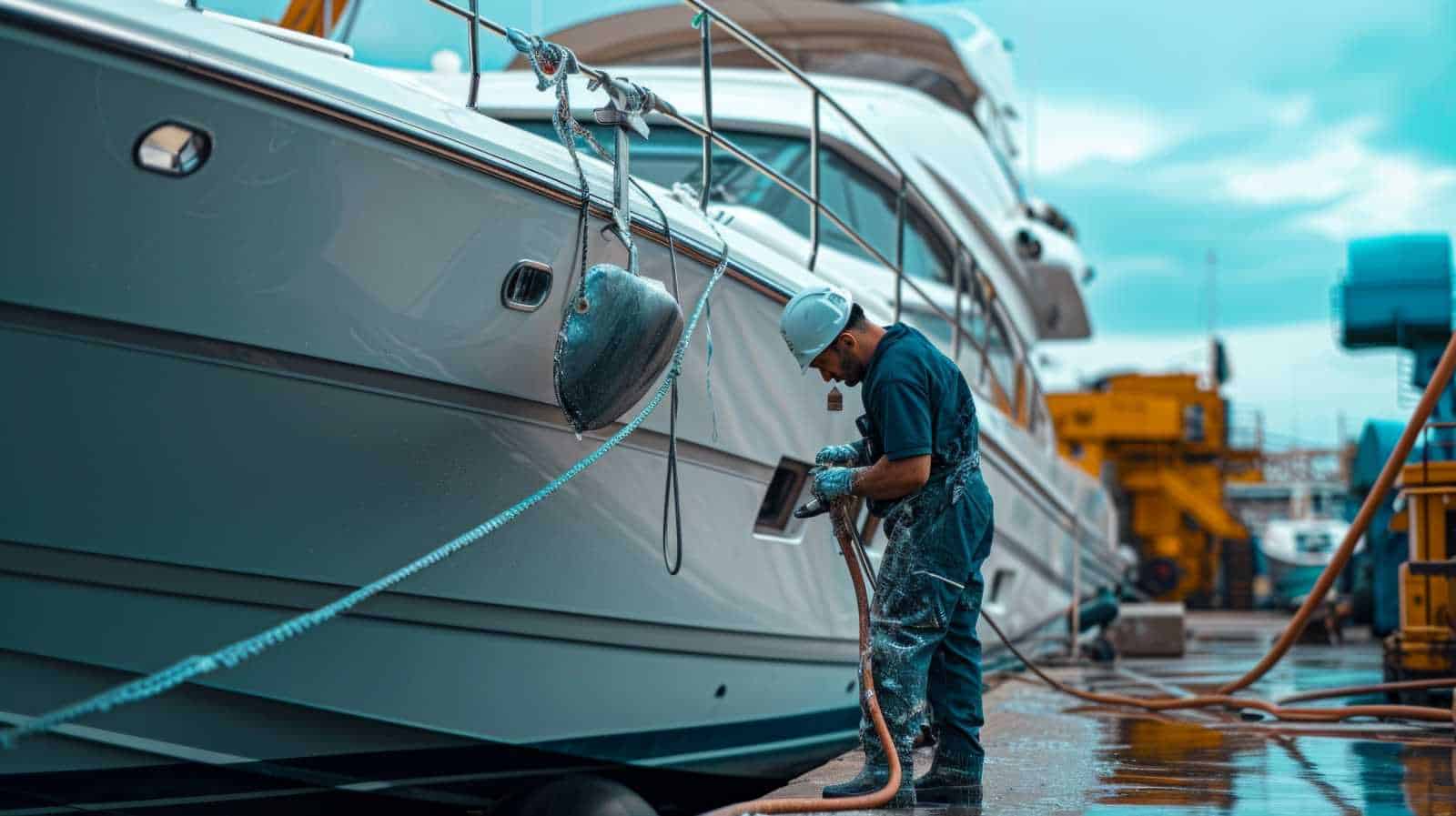
A yacht can look immaculate at its berth and still be approaching three different maintenance deadlines. The engines may be due for service by running hours. The antifouling coating may be nearing the end of its effective life. And a haul-out slot, needed to inspect the underside properly, may have to be arranged before either problem becomes obvious.
That is the weakness of the familiar request for an 'annual service'. It sounds precise, but there is no single annual job that covers every yacht. A lightly used private boat, a high-hour charter vessel and a large motor yacht with several generators and complex hotel systems may be the same age, yet their maintenance programmes should look very different. In the UAE, owners also need to coordinate work around marina access, specialist contractors and the availability of facilities able to lift their particular vessel.
A credible programme begins neither with an arbitrary budget nor with a fixed calendar date. It is a documented plan that separates what the manufacturer requires, what the hull's condition indicates and what can sensibly be completed while the yacht is out of the water.
The engine has its own clock
Marine engines are serviced against the requirements of the exact model, not simply the length of the yacht. YANMAR's published marine service guidance describes maintenance bands at 50, 250, 500 and 750 running hours, but directs owners to the operation manual for the relevant engine. Those figures are not an instruction to service every diesel engine at the same interval. A particular task may be due by hours, elapsed time or whichever limit is reached first.
Outboards can follow a different rhythm. Mercury Marine states that most four-stroke outboard and sterndrive engines require oil changes annually or every 100 hours; the manufacturer also points owners back to the model-specific schedule for gearcase lubricant and other tasks. A private yacht running 60 hours in a year and a commercial vessel logging 600 hours cannot use the same calendar-only approach. Nor should a Mercury outboard interval be applied to a large inboard diesel.
An engine service is more than an oil change. Depending on the equipment and service level, the technician may need to inspect or replace fuel and oil filters, check cooling-water systems, belts and hoses, examine seawater-pump components, investigate leaks and review electronic fault codes. Gearboxes, generators and propulsion drives have their own requirements. For electronically controlled YANMAR engines, the manufacturer specifically recommends authorised support because some diagnostic work needs specialist equipment.
A useful service record therefore identifies each engine and generator by make, model and serial number; notes the hour-meter reading and date; and records the parts, fluids, faults and test results. Without that detail, an invoice saying 'full engine service' offers little evidence of what was actually done.
Below the waterline, condition matters more than a fixed date
Antifouling is often discussed as an annual task, but coating manufacturers do not describe all products as having the same service life. Jotun's Mare Nostrum antifouling is marketed for protection of up to six to twelve months as part of a complete coating system, with performance dependent on water temperature, fouling pressure and sailing hours. The product is not suitable for aluminium hulls. Other systems make different claims; none establishes a universal repainting interval for every yacht in UAE waters.
The operating pattern matters. A boat left stationary for long periods may develop fouling in ways that differ from one used frequently, and areas such as propellers, rudders, intakes, thrusters and other recesses deserve particular attention. A coating that looks acceptable along the broad hull can be failing around fittings where growth or corrosion is harder to see.
A proper out-of-water inspection should distinguish marine growth from coating failure, damaged gelcoat, blistering, corrosion or a problem with underwater fittings. Those findings lead to different work. Cleaning and another compatible coat of antifouling may be sufficient in one case; another may need preparation, primer, repair or investigation before painting. Applying new paint over an unsuitable or poorly prepared surface is not the same as restoring the underlying protection.
There is an environmental dimension too. The International Maritime Organization's biofouling guidance explains that growth on hulls can increase resistance and fuel consumption and contribute to the transfer of invasive aquatic species. Its 2025 guidance on in-water cleaning also recognises that aggressive cleaning can damage coatings and release harmful material into the water. These are international guidelines, not evidence of a blanket UAE prohibition. Owners should confirm the marina's rules, the cleaning method and the waste-handling arrangements before authorising underwater work.
Afloat servicing cannot replace a haul-out
A surprising amount of preventative maintenance can be performed at the berth. Technicians can often attend to electrical faults, some engine work, air-conditioning, pumps, batteries, upholstery and routine inspections without lifting the yacht. Dubai operators such as Xclusive Marine advertise both technical maintenance and regular wash-down or pre-departure services; Abu Dhabi Marine's service centre lists mechanical, electrical, generator, air-conditioning and other work. These are advertised capabilities, and access still depends on the marina and the specific job.
Other tasks require the underside to be accessible and the vessel properly supported. A haul-out can allow antifouling, hull and appendage inspection, anode replacement, propeller and shaft checks, through-hull inspection and repairs to underwater surfaces. The method of lifting, the vessel's displacement and dimensions, cradle arrangements and time ashore are all relevant. A yard that handles a small day boat is not automatically suitable for a deep-draught or heavy superyacht.
Dubai Maritime City is one of the UAE's established repair hubs. In an August 2026 update, operator DP World reported that dry-berth occupancy for yachts and pleasure craft there rose 88% year-on-year in July, with a 110% increase year-to-date. It also reported investment in additional cradles for small craft. Those are figures for activity at one facility, not evidence that every UAE yard is full or that prices have risen by the same percentage. They do, however, underline why a planned haul-out is an operational booking rather than something to arrange only when the hull becomes visibly fouled.
Abu Dhabi has a different spread of facilities. AM Shipyard in Musaffah advertises dry-dock, antifouling and refit work, while Abu Dhabi Marine lists a broad service-centre offering. Owners can use Yachtwize's Abu Dhabi maritime guide for local context, but must verify each facility's current lift capacity, insurance conditions, access requirements and available dates before moving a vessel.
Why a maintenance quotation needs more than one total
There is no defensible single price for 'antifouling a yacht in Dubai' or 'annual maintenance in Abu Dhabi' without defining the vessel and the scope. The public sources reviewed for this article did not provide a sufficiently comparable set of current UAE yard tariffs to support a reliable AED-per-foot figure. Publishing one would risk making a simple clean-and-recoat job appear comparable with extensive surface preparation or structural repairs.
A useful quotation separates lift-out and relaunch, hard-standing or berth charges, labour, surface preparation, materials, mechanical servicing, consumables, parts and any specialist subcontractors. For coating work, it should identify the product and number of coats, the area to be treated, whether the existing paint is compatible and what happens if hidden damage is found after cleaning. For engine work, it should specify the model-specific service level, OEM or equivalent parts, diagnostic checks and the treatment of additional defects.
The cheapest quote may exclude work that the owner assumes is standard. Equally, the highest quote may include preventative repairs or premium materials that a simpler proposal does not. A comparison becomes meaningful only when both yards price the same defined work and explain how variations will be approved. A yacht with twin engines, multiple generators, underwater appendages and extensive exterior finishes will also present a different cost structure from a single-engine runabout, even if both are described as being due for their yearly service.
Build one record from several maintenance schedules
For an owner or captain, the practical solution is a single maintenance record that draws from several sources: the engine and generator manuals, coating history, previous yard reports, equipment servicing requirements and the vessel's operating hours. A short pre-departure check of fluid levels, bilges, alarms and visible leaks complements, but does not replace, scheduled technical work. After each trip, new faults should be logged while they are still easy to describe.
The record should also distinguish inspection from repair. A recommendation to inspect an impeller at a particular interval is not automatically a manufacturer instruction to replace it at every visit. The same applies to batteries, hoses, anodes and paint: measured condition and the relevant service documentation should determine the work. Where safety-critical equipment or a manufacturer's warranty is involved, the appropriate qualified technician or authorised service network matters more than convenience.
For owners seeking contractors, Yachtwize maintains a UAE marine directory and a more focused list of Dubai repair and maintenance providers. These are starting points for finding the right specialist, not substitutes for checking OEM authorisation, experience with the vessel's construction, insurance and the ability to carry out work at the intended berth or yard.
Good yacht maintenance is not simply a matter of spending more each year. It is the discipline of doing the correct work before the next failure, at the correct interval and in a facility equipped for the vessel. Engine hours, coating condition and yard availability will rarely align perfectly. A credible plan recognises those differences rather than disguising them under one annual invoice.
Published by
 Yachtwize TeamMaritime industry insights & reporting
Related Topics
Explore Directory
Find yacht charter operators, marinas and marine service providers across the UAE.
Explore DirectoryShare
Follow Us
Subscribe to our newsletter
Get the latest yachting news, events, and company spotlights delivered to your inbox.